
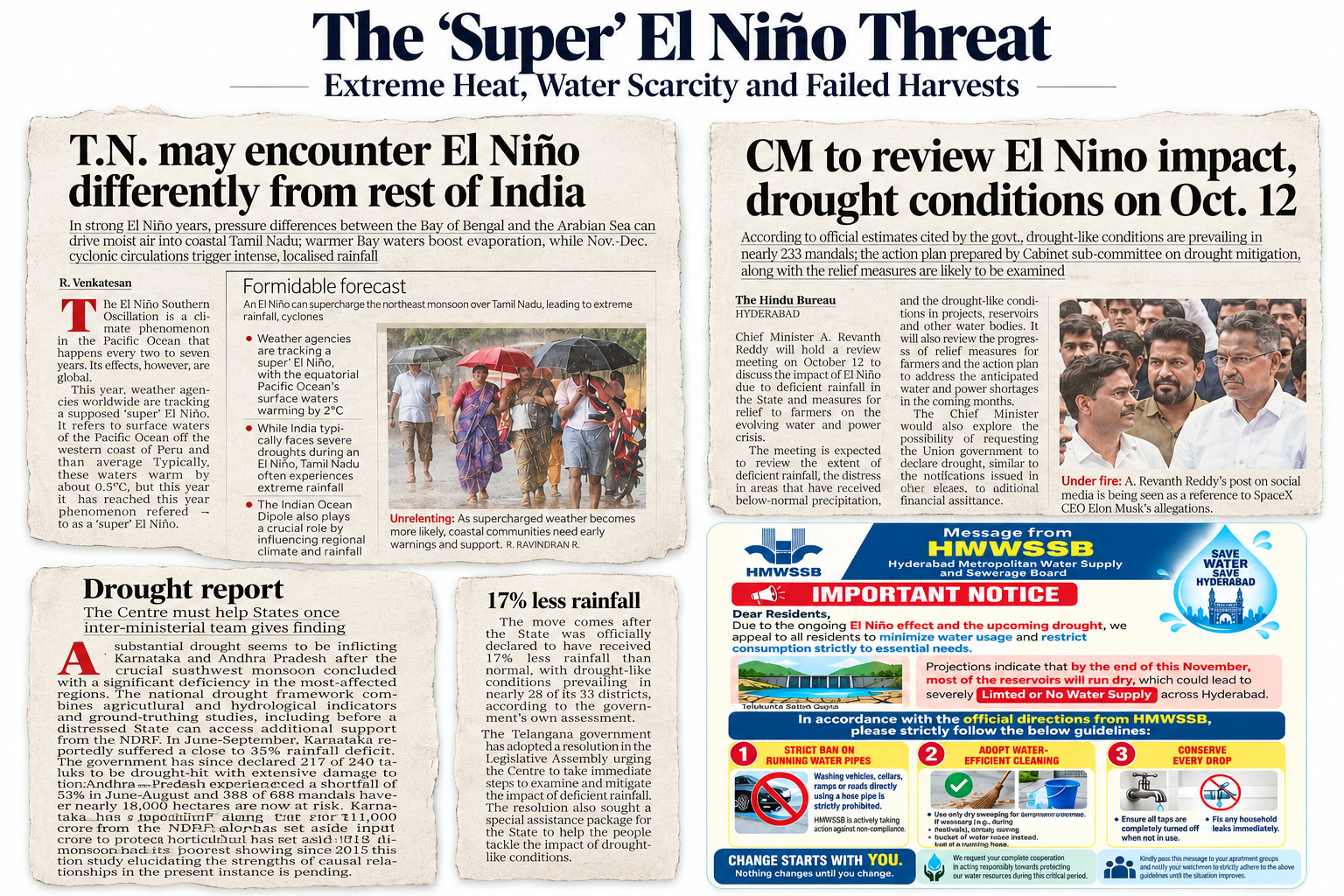
Source: The Hindu, The Times of India editions of October 2026
1. Why El Niño Matters Beyond the Pacific?
The aforementioned newspaper articles make one wonder why El Niño is being linked to drought in some areas while other areas may see exceptionally high rains. Although these results might seem paradoxical, not every area is equally impacted by El Niño. In order to comprehend why, one must look beyond the Pacific Ocean to the climatic patterns it affects, as well as the dangers these shifts pose to individuals, businesses, and economies.
In the end of September 2026, India’s southwest monsoon had delivered 12.6% less rainfall than its long-period average, making 2026 the country’s weakest monsoon in more than a decade. The shortfall was not just a number on a rainfall chart. News reports linked it to weaker farm incomes and crop prospects, with tractor sales falling as rural demand came under pressure.
What makes this year particularly interesting is that the weak monsoon was not completely unexpected. In April 2026, the India Meteorological Department (IMD) had already forecast the 2026 southwest monsoon at 92% of the long-period average, with an uncertainty of ±5%, and put the combined probability of deficient or below-normal rainfall at 84%. The same forecast noted that ENSO conditions were expected to move towards El Niño during the monsoon season.
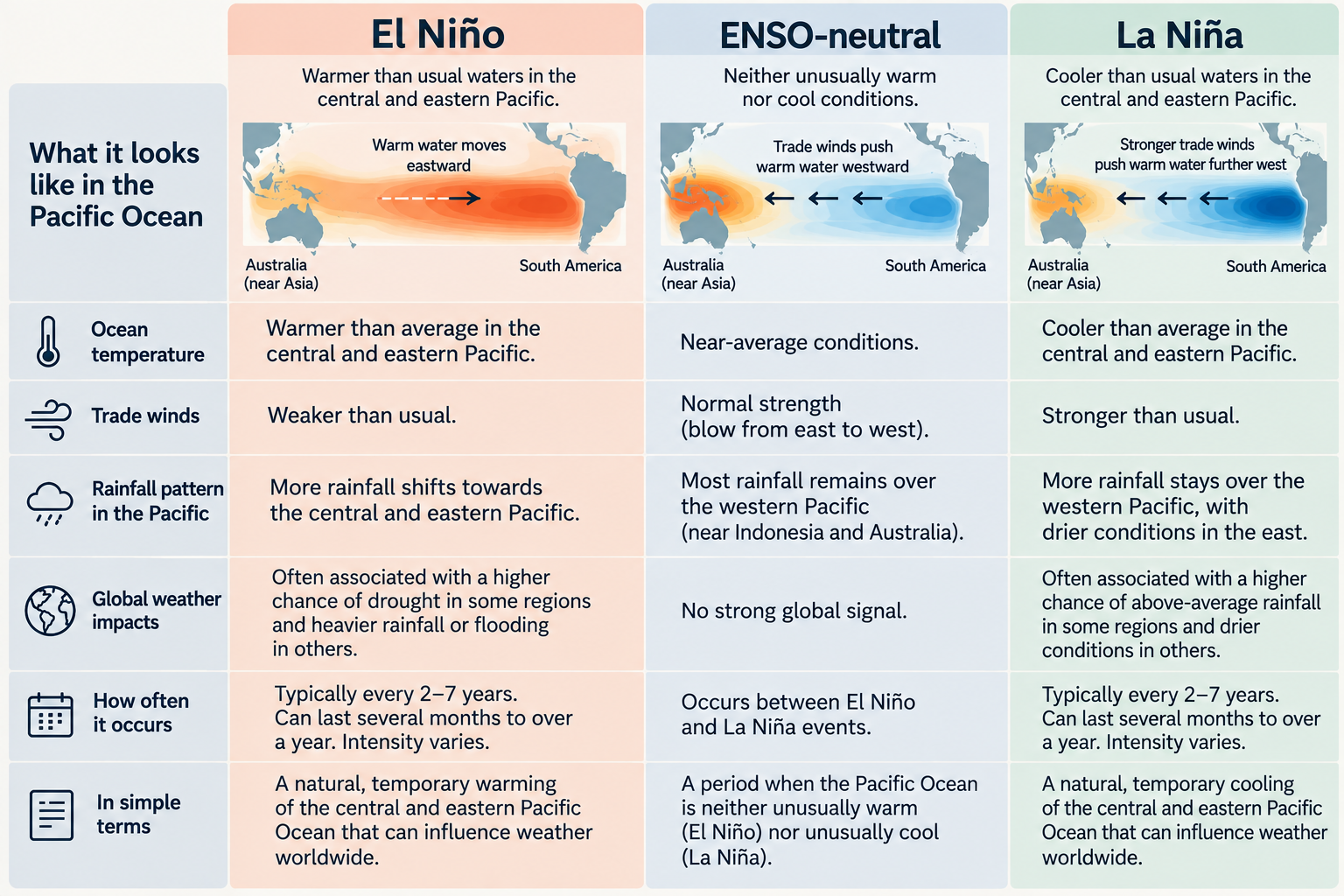
El Niño is a stretch of time when the surface waters in the central and eastern tropical Pacific get much warmer than normal. At the same time, the air above the ocean changes. La Niña is the opposite. In that phase, the same waters turn unusually cool, and the air shifts the other way. It is not just a water temperature swap. The ocean and the air both take part in the change.
The wider pattern is called the El Niño–Southern Oscillation, or ENSO. In plain terms, ENSO is what researchers call the recurring back-and-forth between the warm El Niño phase and the cool La Niña phase. There are also times when neither side takes over. Those are called ENSO-neutral. These phases do not come on a fixed schedule. Even so, ENSO events usually show up every few years. They can last for many months, or even more.
Figure 1: Key differences between El Niño, La Niña and Neutral Conditions
The Pacific is not isolated from the rest of the climate system. Changes in its temperature can influence atmospheric circulation and shift the likelihood of different rainfall and temperature patterns far beyond the region. That is why ENSO is closely monitored: its phase can provide an early indication of how weather risks may evolve in the months ahead. This early signal matters for decisions on the ground. Governments can prepare for drought or flooding, farmers can plan around changing rainfall, and weather-sensitive sectors such as energy, food, transport and insurance can assess potential exposure. WMO identifies ENSO monitoring as an important part of seasonal forecasting and early warning.
This makes the current El Niño particularly relevant. WMO reported in 2026 that El Niño was established and likely to persist into early 2027, while also stressing that its impacts vary by region and are influenced by other climate drivers. El Niño and La Niña help us understand why weather patterns can shift from one year to the next. But today, these natural climate fluctuations are unfolding against a backdrop of global warming.
2. Is climate change intensifying El Nino?
El Niño is a natural climate pattern, but it now unfolds in a world that is already warming. Scientists are still investigating whether human-caused climate change is altering the El Niño–La Niña cycle itself. Some studies suggest that greenhouse warming may be contributing to more frequent strong El Niño and La Niña events. A 2023 review in Nature Reviews Earth & Environment, for instance, found evidence suggesting a human influence on changes in ENSO variability since the mid-twentieth century. However, this remains debated: the IPCC finds no robust consensus that the size of El Niño-related Pacific temperature fluctuations will systematically increase, while the World Meteorological Organization says there is no established evidence that climate change increases El Niño’s frequency or intensity.
The picture becomes clearer when we look at the impacts. Global warming has raised the planet’s background temperature, so an El Niño event now interacts with an already warmer climate. A warmer atmosphere can also supply more energy and moisture to extreme weather, potentially intensifying heatwaves and heavy rainfall. The IPCC projects that ENSO-related rainfall variability will increase significantly in the latter half of this century, even without a corresponding increase in the size of Pacific temperature fluctuations. A 2025 modelling study similarly found that the temperature impacts of strong El Niño events could intensify in some regions under future warming, primarily because of changes in the background climate.
Although scientists are still investigating how climate change may affect ENSO itself, the effects of El Niño are already known to vary considerably by region and season. To understand the risks it creates, we need to look at how these patterns play out in different parts of the world.
3. How does El Niño affect different parts of the world?
An El Niño does not arrive with the same consequences everywhere. The warming of the tropical Pacific changes where heat and moisture are released into the atmosphere, which in turn influences large-scale circulation and the movement of weather systems. As those changes travel across the atmosphere, some regions tend to become wetter, others drier, and some experience a greater likelihood of unusual heat or storms.
India is one of the clearest examples of how a Pacific climate pattern can matter thousands of kilometres away. El Niño has long been linked with weaker summer monsoon rainfall over India, and research published by the India Meteorological Department describes ENSO as an important influence on year-to-year monsoon variability. But the relationship is not automatic. Some El Niño years have still brought normal or above-normal rainfall to parts of India because other climate influences, including conditions in the Indian Ocean, also shape the monsoon. So, El Niño is better seen as a signal that changes the odds of a weaker monsoon.
Tamil Nadu offers an important example of why El Niño’s effects cannot be generalized across an entire country. Although El Niño is often associated with a weaker Indian summer monsoon, Tamil Nadu receives much of its seasonal rainfall during the October–December northeast monsoon. Research published in MAUSAM in 2025 examined ENSO and northeast monsoon rainfall in coastal Tamil Nadu and reported that prolonged El Niño events were associated with excess rainfall in its analysis.
Also explained in the article published in The Hindu asserting conditions over the Bay of Bengal and the Indian Ocean, together with the development of low-pressure systems and cyclonic circulations, can influence how much rain reaches the Tamil Nadu coast. This means that a climate pattern associated with drought risk in one season or region can coexist with intense rainfall elsewhere. It does not mean every El Niño will bring floods to Tamil Nadu but the outcome depends on the interaction of several regional climate factors.
When we look westward across the Pacific, the pattern shifts. Australia, Indonesia, and parts of Southeast Asia often get drier weather in El Niño. This is most clear in the months when the ENSO signal is strongest. What drives it is the location of rising air and rain. In El Niño, that rising air zone tends to move toward the central and eastern Pacific. As a result, the western Pacific can end up with less rain.
Africa does not follow the same path. For parts of southern Africa, El Niño is often linked with drier conditions. But eastern Africa may see more rain during the October to December “short rains.” The key idea is that one El Niño event can mean different outcomes in different places. A situation that raises drought risk in the south can also raise the chance of heavy rain farther east.
The America show a different mix too. The effects depend on the time of year. They also depend on changes in the jet stream. In El Niño winters, the Pacific jet stream often shifts in a way that brings more rain to parts of the southern United States. Areas farther north may turn warmer and drier.Along the west coast of South America, El Niño can bring very heavy rain. Places such as coastal Ecuador and Peru can be hit by unusually strong rainfall.
Figure 2: EL Nino conditions across the globe
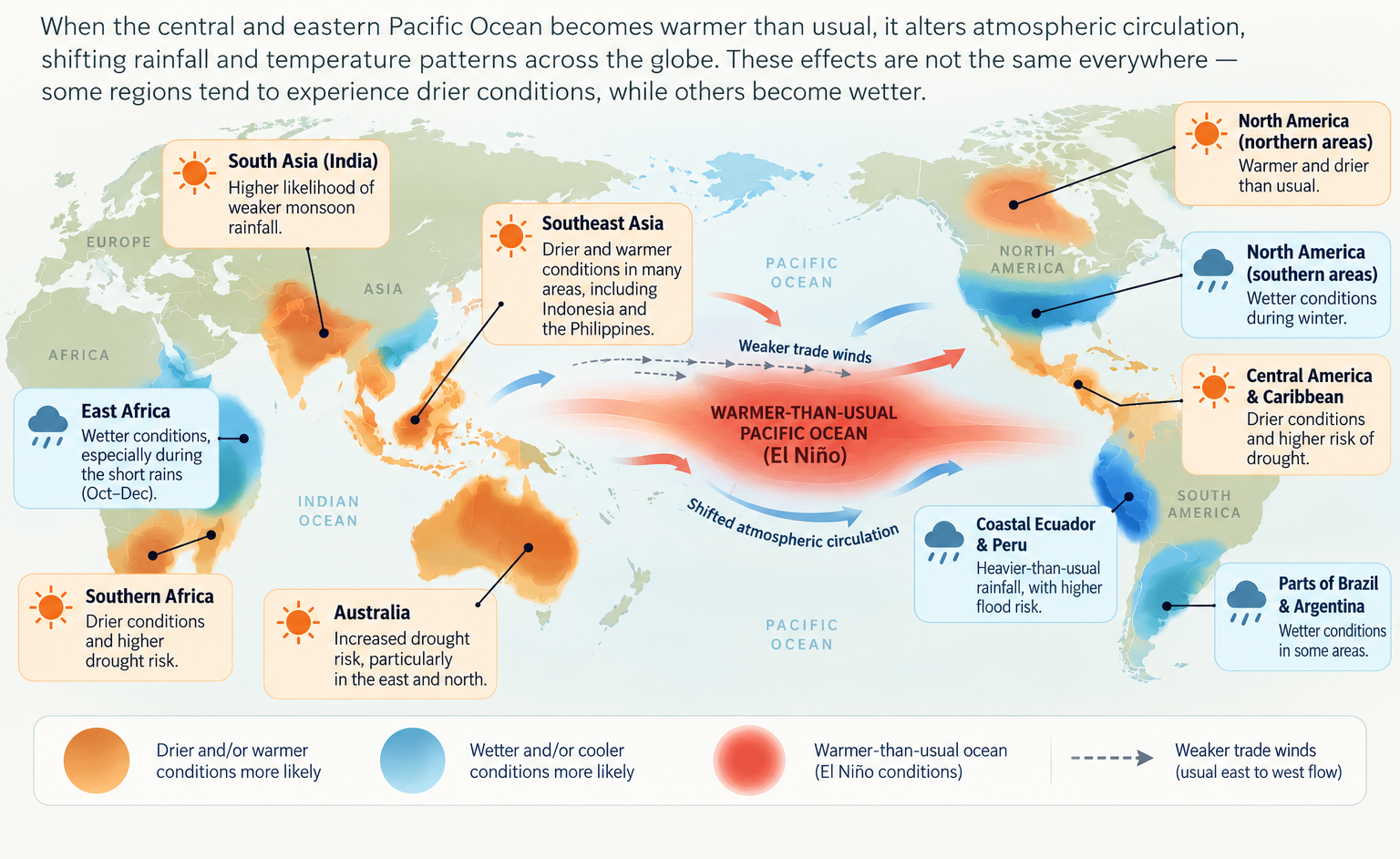
Source: India, westward conditions, South Africa, America
El Niño can affect how tropical cyclones form and move. When the air patterns shift on a wide scale, they can change wind shear and ocean heat in ways that do not help Atlantic hurricanes. At the same time, the setup can favor more storms in the central and eastern Pacific. This is still about shifting odds, not about fixing what happens in a particular season.
Looking across regions, it is clear that El Niño is not only a Pacific story. One El Niño episode can bring a weaker monsoon in India. It can also add drought stress to Australia or parts of southern Africa. Elsewhere, it can mean heavier rain in some areas of South America. In the United States, it can also change the pattern of winter storms.
This is also where the link to climate risk matters most. The first signal is the rainfall or temperature anomaly. But the bigger issue is what that signal does to people and systems that are exposed. A period with less rain than normal can turn out very differently for a rain-fed farm, a hydropower station, a factory, or an insurance company.
4. El Niño and its deep Impact Across Different sectors
El Niño’s consequences extend well beyond fluctuations in precipitation and temperature patterns. These phenomena can significantly disrupt economic functioning by affecting agricultural production decisions, constraining water and electricity supplies, threatening business continuity, and altering distribution networks for commodities. Often, the difficulty stems not from a single discrete disruption, but from how meteorological disturbances cascade through interconnected economic sectors. A 2023 study published in Nature Communications investigates these cascading consequences, establishing connections between severe weather phenomena and their downstream effects on crop production, service infrastructure, supply chain disruptions, and overall economic performance.
Agriculture
The agricultural sector frequently experiences the initial impacts of El Niño due to its dependence on precise rainfall patterns and volume. Delayed precipitation or insufficient rainfall can compel farmers to postpone planting schedules, diminish cultivated acreage, or contend with diminished harvests. Elevated temperatures and inadequate forage development similarly pose challenges to livestock operations. If production falls across major growing regions, the consequences may extend to food availability, farmers’ earnings and commodity prices.
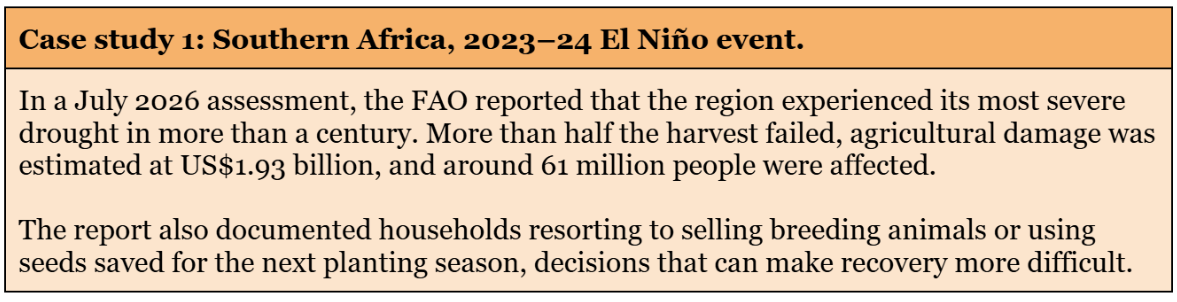 Source: El Niño’s hidden losses: when one season’s damage fuels the next crisis
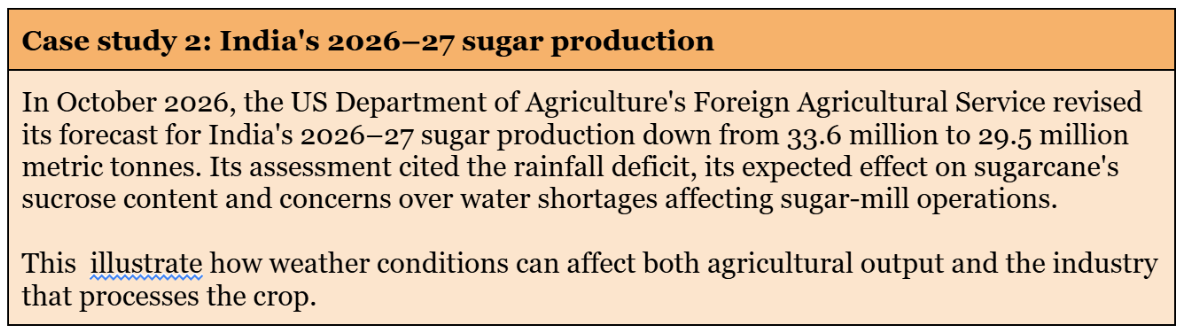 Source:India sugar production view slashed as El Nino hits, USDA says
Manufacturing and industrial operations
Factories and industrial facilities can be affected even when their buildings and machinery remain undamaged. Many operations depend on reliable electricity, sufficient water and uninterrupted supplies of raw materials. When any of these becomes scarce, businesses may face higher operating costs, reduced output or temporary shutdowns.
Zambia’s 2024 drought illustrates the connection between water, electricity and industrial activity. The IMF reported that, by the end of September 2024, electricity generation had fallen to 27.2% of installed capacity. Hydropower output at Kariba Dam that was normally a major source of the country’s electricity, had dropped sharply, and mining companies doubled their reliance on imported electricity to 40% of their consumption. The example demonstrates how a climate shock can raise costs and complicate industrial operations without physically damaging a factory or mine.
Figure 3: 2023-24 drought and hydropower crisis
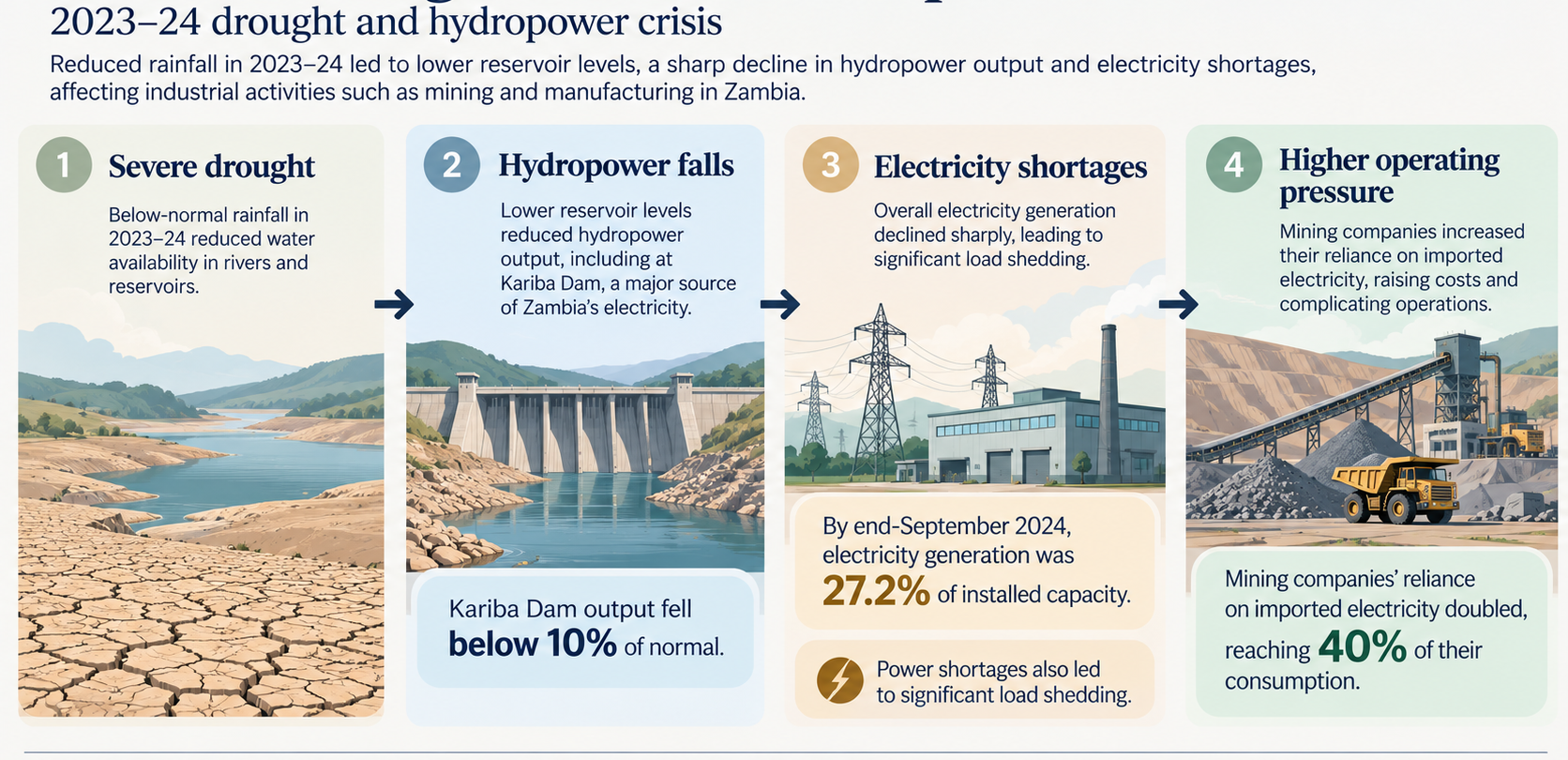
Source: infographic based on the information provided in Zambia:fourth review
Infrastructure and transport
Infrastructure need not sustain physical damage for climate events to cause operational disruption. In many cases, the challenge arises when critical infrastructure cannot maintain its standard performance levels. This reality was demonstrated during the 2023–24 El Niño event affecting the Panama Canal, a globally significant maritime corridor. The canal depends on freshwater reserves from Gatun Lake to power its lock systems, which adjust vessel elevation across varying water levels. As drought diminished available water supplies, sustaining conventional shipping capacity grew progressively more challenging.
According to the Panama Canal Authority, October 2023 rainfall was 41% below normal, leaving Gatun Lake at exceptionally low levels. The wider lesson is that when a critical transport route loses capacity, the consequences can travel far beyond the location experiencing the drought. Shipments may be delayed, freight costs can rise, and businesses that depend on timely deliveries may face additional costs and uncertainty.
Figure 4: Panama Canal: Drought and supply chain uncertainty 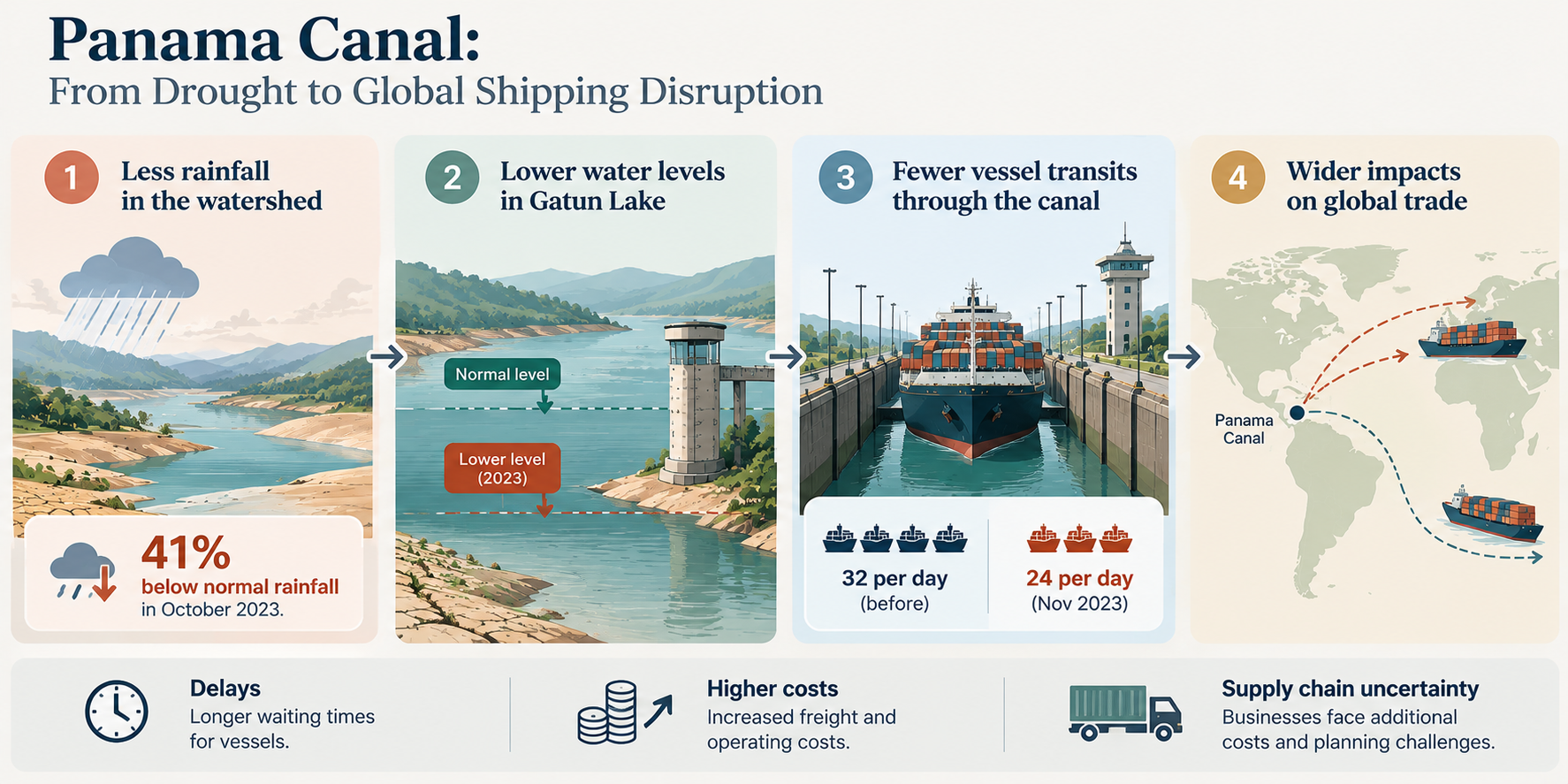
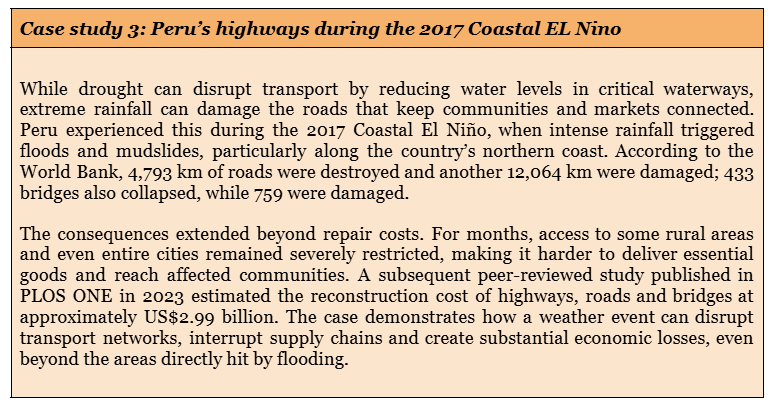
Source: World bank , Study of Plus one in 2023
Supply chains and commodity markets
When El Niño reduces production in major agricultural regions, the consequences can travel through international markets. Food processors may pay more for ingredients, manufacturers may need alternative suppliers, and import-dependent businesses can become more exposed to shortages and price fluctuations.
The World Bank’s October 2023 Commodity Markets Outlook noted that El Niño has historically been associated with higher prices for agricultural commodities. It warned that the 2023–24 event could put upward pressure on commodities including cocoa, food oils, natural rubber, rice and sugar, whose production is concentrated in regions vulnerable to El Niño-related dry conditions. The report also stresses that impacts vary across crops and regions.
Price escalation is not predetermined; inventory levels, consumer demand, trade barriers, and agricultural yields in other regions all play significant roles in shaping market dynamics. However, when production is geographically concentrated in areas susceptible to climate variability, an unfavorable growing season can substantially reduce buyer options and expose supply chains to heightened disruption risks.
Financial losses and business interruption
The financial consequences of El Niño can emerge through very different pathways. In regions affected by drought, businesses may struggle with water shortages, reduced agricultural production or unreliable electricity. Elsewhere, intense rainfall and flooding can damage property, interrupt transport and force businesses to suspend operations.
The Consequences may persist long after weather conditions normalize. An organization that experiences income loss during a disruption may encounter difficulties meeting loan obligations, whereas smaller vendors operating with constrained financial resources may face prolonged recovery challenges.
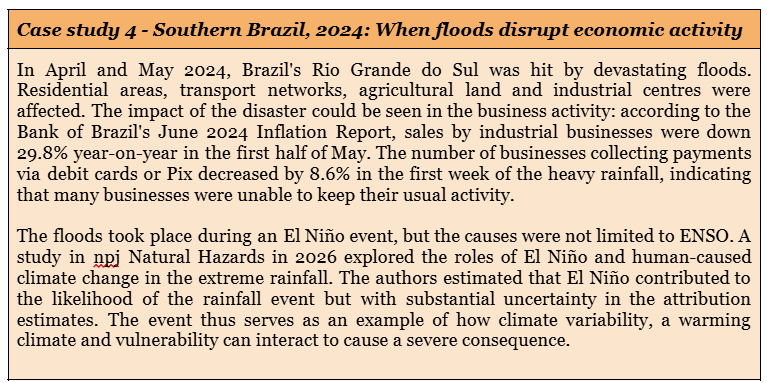
Source: Climate change and El Niño behind extreme precipitation , Brazil’s june 2024 inflation report
These findings show why assessing the financial consequences of El Niño requires more than estimating the cost of repairing damaged assets. Lost production, delayed sales, interrupted supply chains and declining borrowers’ ability to repay loans can all contribute to the final impact. For climate-risk analysis, distinguishing physical damage from business interruption is essential: both can create financial losses, but they arise through different pathways and require different methods of assessment.
Figure 5: How El Niño affects different key sectors across the globe
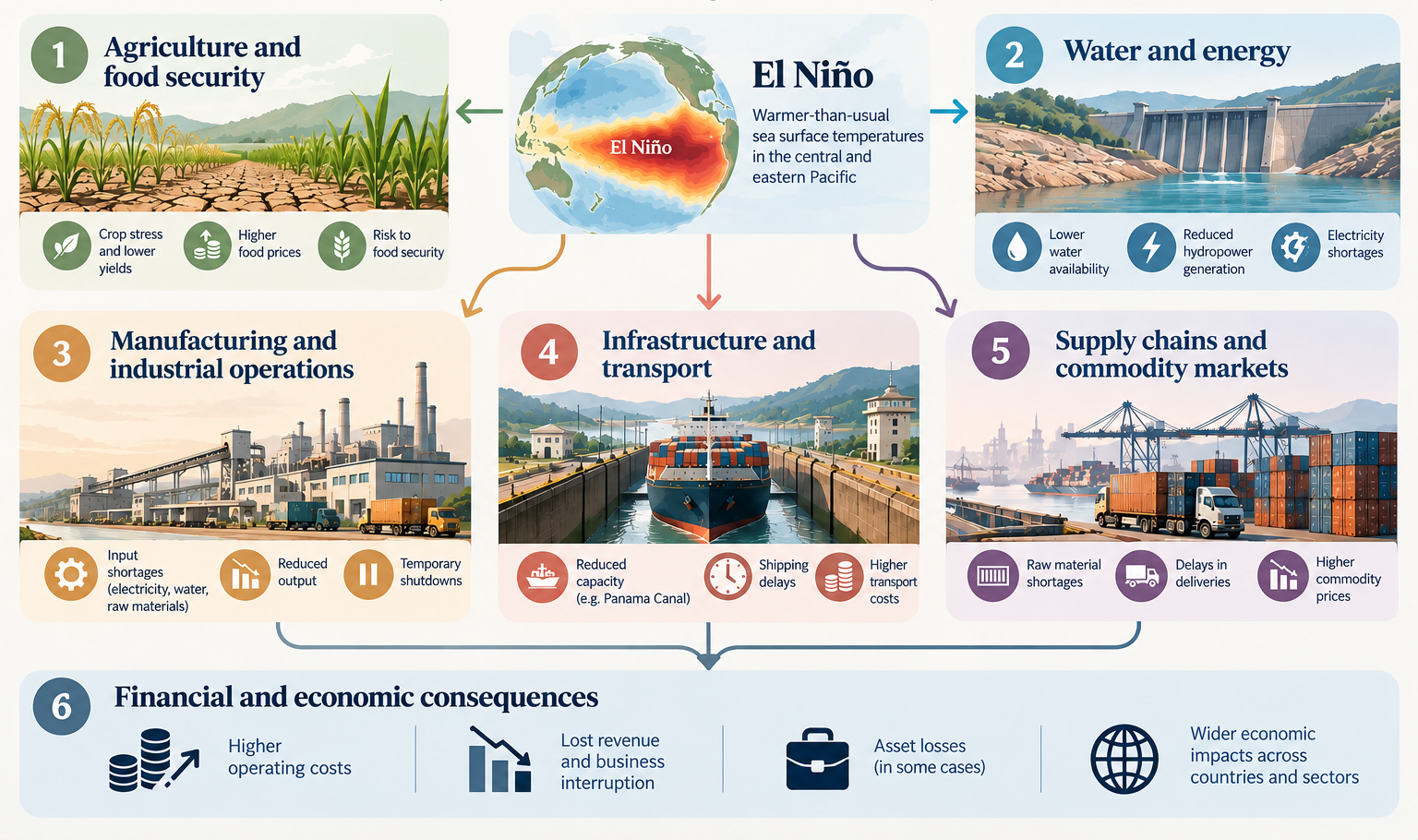
Note: Image for representation purpose only
5. Behind Every Climate Statistic, There Are People who are affected
El Niño does not only affect different sectors but also has a significant impact on the human aspect. Behind every story about the impact of this phenomenon on agricultural production, water supply, or electricity generation, there are people who suffer from the consequences of natural disasters and unpredictable weather patterns. Severe weather conditions such as rainfall shortages, high temperatures, and prolonged heatwaves can lead to restricted access to food, drinking water, and even cause malnutrition, heat stress, or other serious health issues.
Moreover, the ones who are mostly vulnerable to these consequences are populations which rely on agriculture for their living and do not have enough resources to adapt to changing climatic conditions. For example, according to UNICEF, the six Southern African nations were facing a severe threat to the health and nutrition status of more than 270,000 children because of the 2023-2024 El Nino-related drought that is expected to exacerbate acute malnutrition in 2024. Thus, it can be seen that the impact of the weather pattern on agricultural production can undermine food security, nutrition, and health.
In addition, the loss of agricultural products and farm animals, as stated above, can affect not only the health and access to food of the population but also the economy and other spheres of social development. A decrease in business revenues, changes in labor patterns, and insufficient access to medical services, clean water, and other necessities will have a detrimental effect on the population, leading to a decreased quality of life, economic hardship, and even social unrest. WHO highlights food insecurity, heat stress, and the impact on the health situation as factors which can be brought by El Nino and related weather patterns. Therefore, it can be concluded that the phenomenon can have a serious impact not only on different sectors of the economy but also on people, their health, and even the state as a whole.
Figure 6: Human cost of El Niño
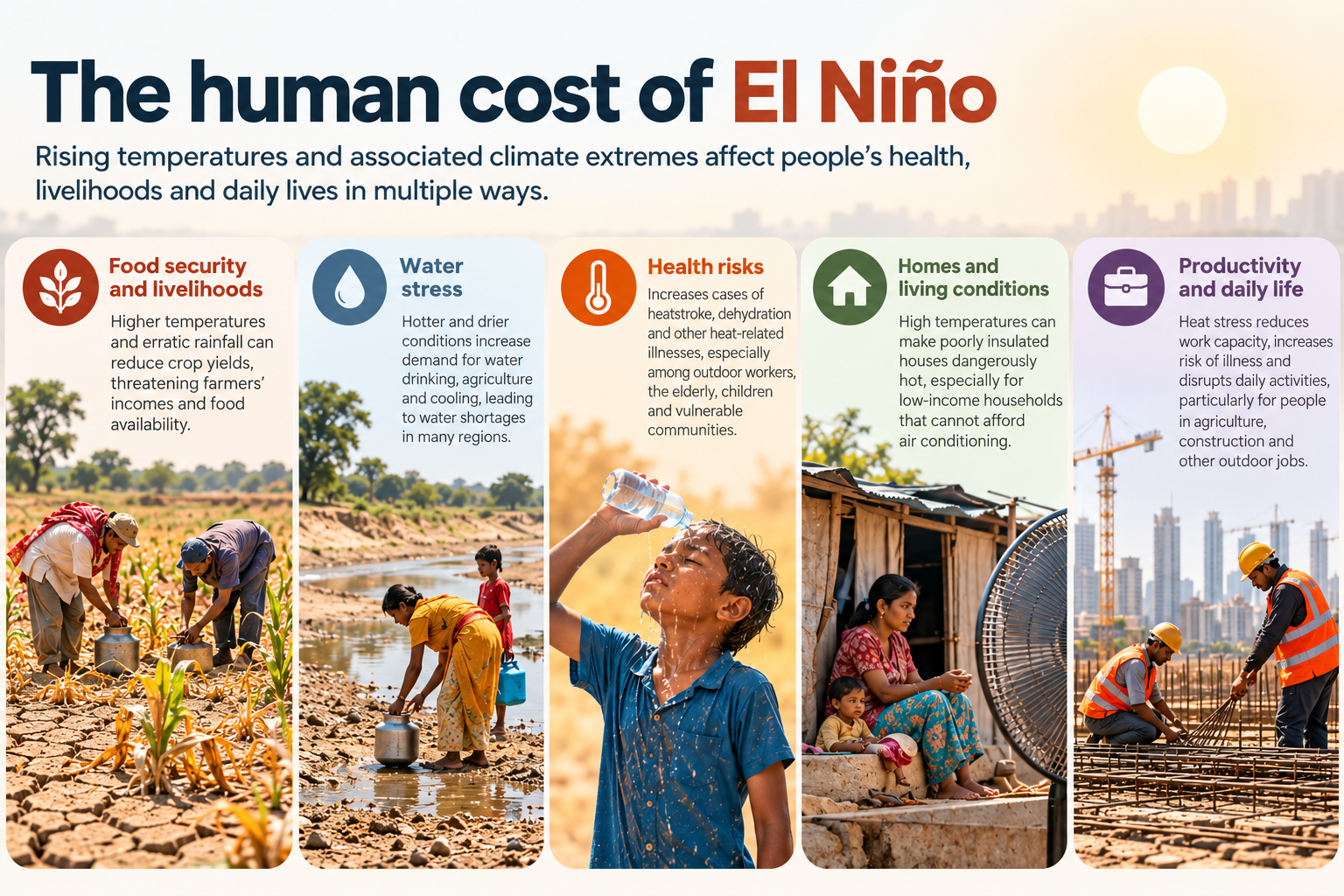
Note: Image for Representation purpose only
6. How to mitigate the risk associated with El Nino
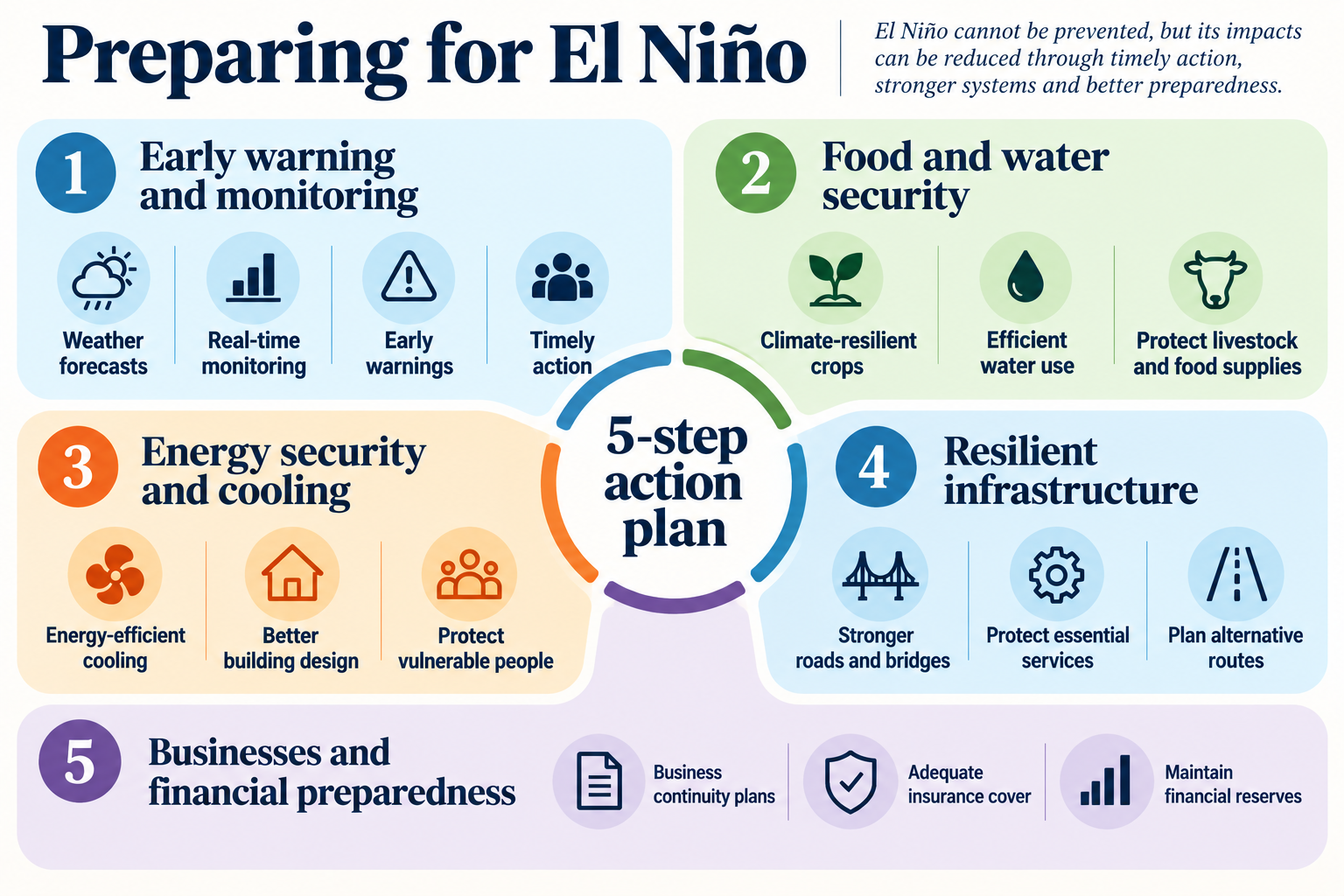
The impacts discussed in this article clearly show that simply understanding what El Niño is can only take us so far. Mitigation is necessary to avoid the economic and social consequences that it brings about. From agricultural losses and water scarcity to the increased need for power for air-conditioning and heating and the disruption of transport networks, these can all have adverse effects on society. Different areas are exposed to different risks, and the response in each case should be specifically tailored to deal with them.
This requires more than just accurate weather forecasting; it calls for the protection and preservation of resources, managing rising power needs, business continuity management and community preparedness.
Early warning and monitoring
Recognizing the emergence of El Niño conditions represents merely the initial step; governmental and corporate entities must additionally identify the geographic areas where drought, excessive precipitation, or severe temperature fluctuations present the most substantial threats. Systematic observation of precipitation patterns, atmospheric temperatures, soil hydration levels, water storage facilities, and agricultural productivity metrics enables the conversion of meteorological forecasts into actionable business and policy decisions. Within India, the India Meteorological Department’s specialized agricultural weather guidance assists cultivators in determining optimal timing for crop planting, water management strategies, and supplementary agricultural operations tailored to regional climatic circumstances.
The Food and Agriculture Organization’s proactive intervention methodology similarly emphasizes taking decisive action preceding the materialization of a forecasted threat into an actual emergency. Timely alerts can activate interventions including the dissemination of appropriate plant varieties, supplying animal nutrition products, safeguarding freshwater resources, or mobilizing disaster response capabilities. An alert proves effective only when recipients possess adequate time, pertinent information, and necessary capabilities to respond appropriately.
Protect food and water security
Food and water security are closely interrelated during El Niño. When rainfall is insufficient, farmers may lose crops, while communities experience reduced water supplies. The effects may persist into the following season if households lose their savings, seeds, or livestock. Depending on local conditions, strategies such as drought- and heat-tolerant crops, diversified planting, efficient irrigation, rainwater harvesting, and improved water storage can lessen these risks. The FAO also advises protecting livestock, improving access to animal feed, and giving farmers timely guidance on planting.
Preparation must also address excessive rainfall. In areas prone to flooding, maintaining drainage, protecting water and sanitation systems, and safeguarding harvested crops can limit damage and help prevent contamination. The aim is to make food and water systems more resilient to both scarcity and excess, rather than assuming that all regions will face identical conditions.
Strengthen energy security and make cooling affordable
Higher temperatures can drive up electricity demand as households and businesses rely on cooling systems more often. In July 2026, the International Energy Agency reported that global electricity demand for space cooling had increased by 50% since 2015. While this increase reflects wider warming and greater access to cooling not El Niño alone, it demonstrates the added strain that hot conditions can place on power systems.
Businesses and utilities can prepare by enhancing energy efficiency, servicing cooling equipment, reinforcing grids and planning for periods of peak demand. Improved insulation, shaded structures and reflective roofs can help lower cooling requirements. At the same time, access to cooling must be maintained for people who cannot afford air conditioning or experience unreliable electricity. Drinking water, shaded areas for rest, modified outdoor working hours and accessible cool spaces can help protect vulnerable communities during periods of extreme heat.
Make infrastructure resilient before a weather event
The drought affecting the Panama Canal and Peru’s highways damaged by floods show how various weather hazards can interfere with critical infrastructure. Drought can limit transport that relies on water, whereas heavy rainfall may damage roads, bridges, and drainage systems. Governments and operators should therefore locate vulnerable assets before the relevant season, maintain drainage, inspect bridges, strengthen exposed infrastructure when needed, and establish contingency routes for transport disruptions.
The UN Office for Disaster Risk Reduction’s Principles for Resilient Infrastructure highlights the importance of planning infrastructure so essential services—including transport, energy, and water—can remain operational during and after disruptive events. Preparing for resilience in advance can help reduce both repair expenses and the broader effects of service interruptions.
Prepare businesses and finances for disruption
Even if buildings stay undamaged, businesses may lose income when electricity, water, transportation, or raw materials are no longer available. Businesses can limit this risk by determining their critical dependencies, securing backup suppliers, testing business-continuity plans, and keeping financial reserves. It is also important to review insurance coverage, especially since individual policies may treat physical damage and business interruption differently.
Governments can support these measures by providing contingency funds, targeted aid for vulnerable households and farmers, and financial mechanisms that ensure recovery assistance is delivered quickly. The goal is to lower the risk that a single difficult season compels a household to stop farming or causes a small business to shut down permanently.
El Niño cannot be prevented, and no forecast can eliminate all uncertainty. However, improved monitoring, more robust food and water systems, dependable energy, resilient infrastructure, and financial preparation can limit preventable losses. The priority is to translate climate information into practical action before a foreseeable hazard develops into a broader economic or humanitarian crisis.
Figure 7: Mitigation of Risk associated with EL Nino
Note: Image for representation purpose only
October, 2026