

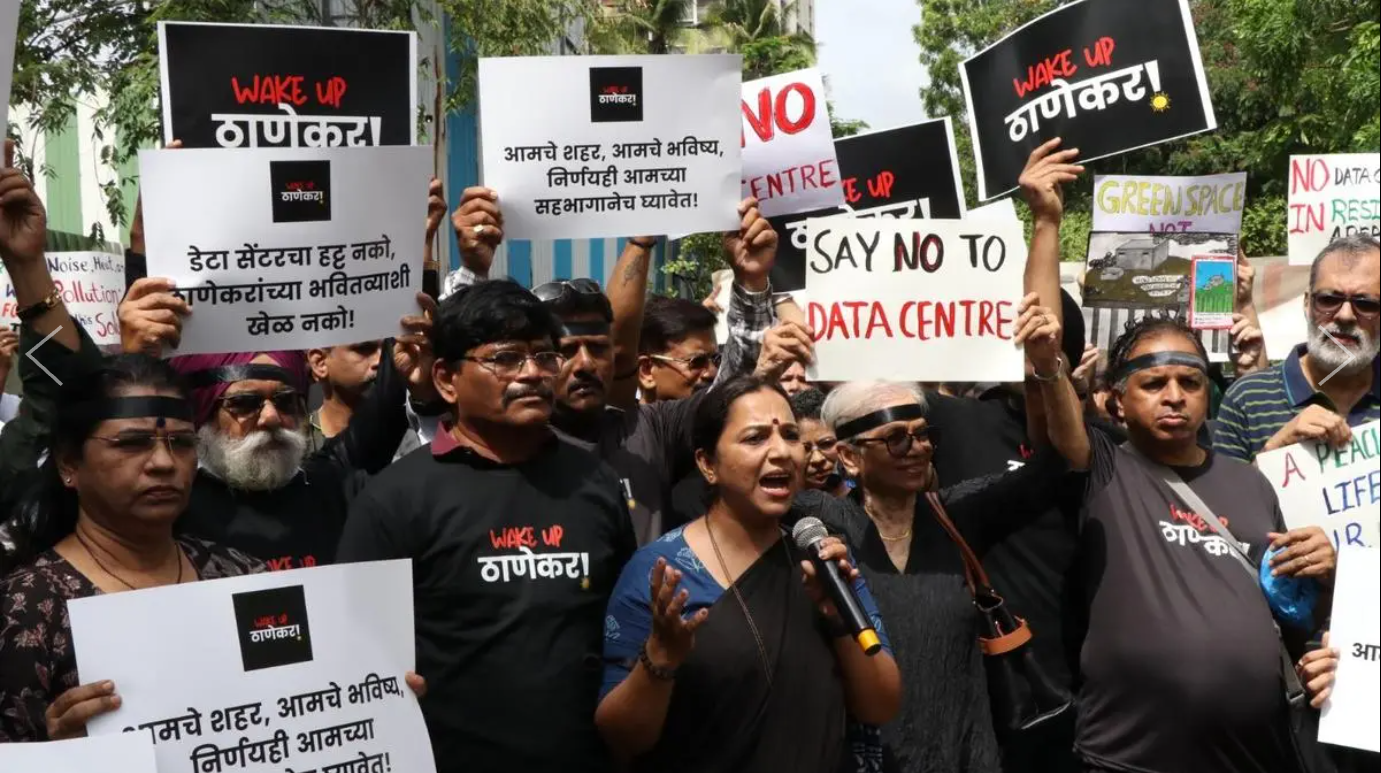
 Source: At a protest by Wake Up Thanekar against the proposed AWS data center in Thane on July 19, 2026.
Dear Readers,
In our last article, we explored El Niño and the possibility of very strong events influencing weather patterns into early 2027. Its effects vary across regions, but the risks of water stress, unpredictable rainfall, intense downpours and drought-like conditions remain a concern for many parts of the world, including India. This week, Cyclone Arnab brought heavy rainfall and disruption to India’s East coast, bringing renewed attention to the damage extreme weather can cause to communities and essential services.
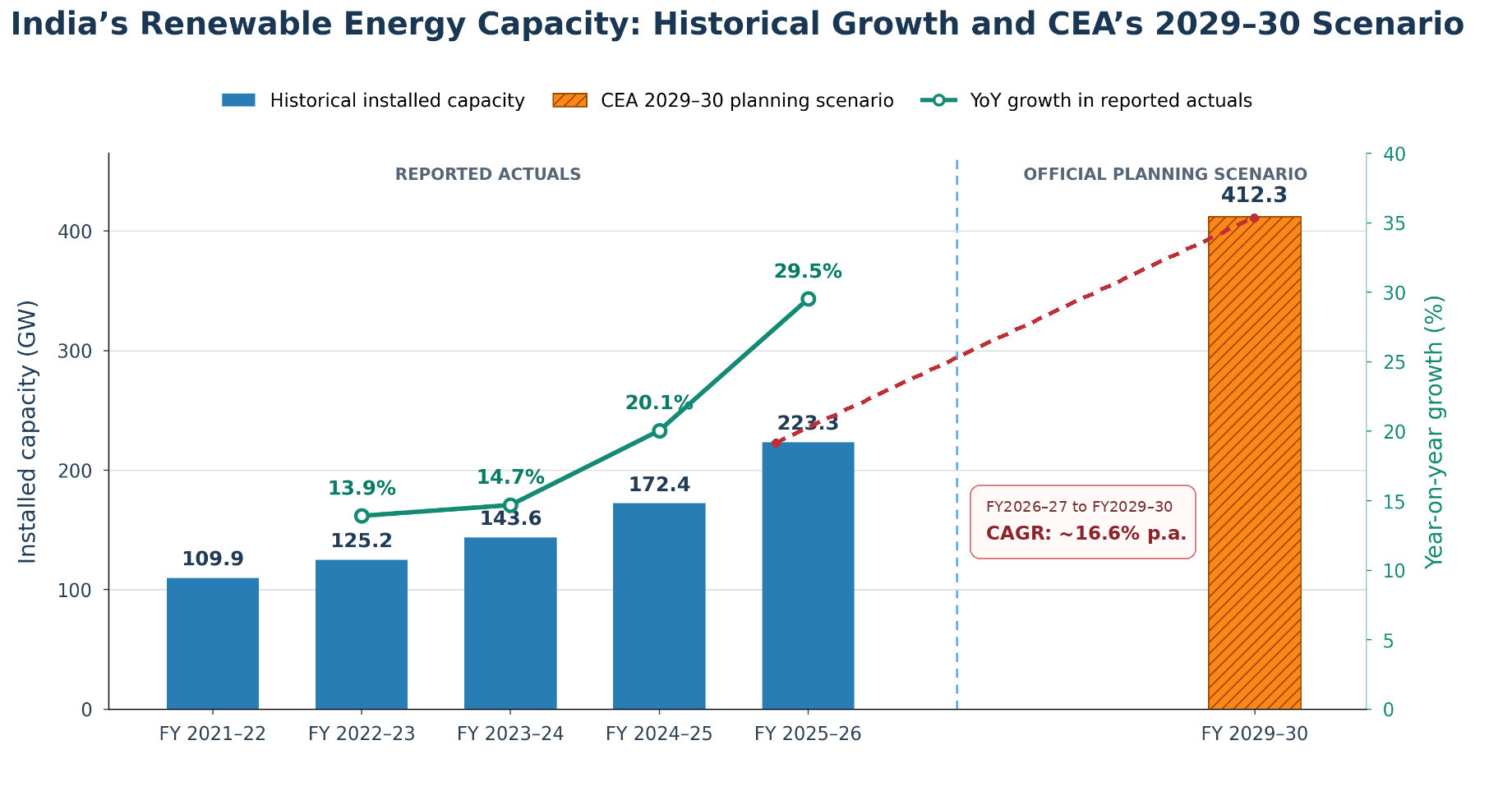
Meanwhile, India continues to invest in new data centers, roads, highways and renewable energy capacity. For a fast-growing economy, this expansion is necessary. But as weather patterns change and extreme events put existing systems under pressure, another question becomes important: are the infrastructure assets we are building today prepared for the climate conditions they will face over the coming decades? This is the question we explore in the present article.
India is investing in a new generation of infrastructure, from renewable energy installations and transport networks to data centers supporting its growing digital economy. According to CRISIL Ratings, investment across selected infrastructure sectors is expected to grow by 45–50% over FY2026–27 and FY2027–28, reaching approximately ₹23–24 lakh crore. This expansion presents significant economic opportunities, but it also raises questions about the environmental conditions and climate risks these investments will face.
Figure 1. India’s renewable energy capacity: historical installed capacity and the CEA’s 2029–30 planning scenario. Historical figures represent reported installed capacity; The projected figure covers solar PV, wind, biomass and small hydro, excluding large hydropower and pumped storage.
A similar shift is underway in digital infrastructure, where rising demand for cloud computing and artificial intelligence is driving investment in large-scale data centers which can be seen in increase Installed Data-Centre Capacity.
Figure 2. Growth in India’s installed data-center capacity
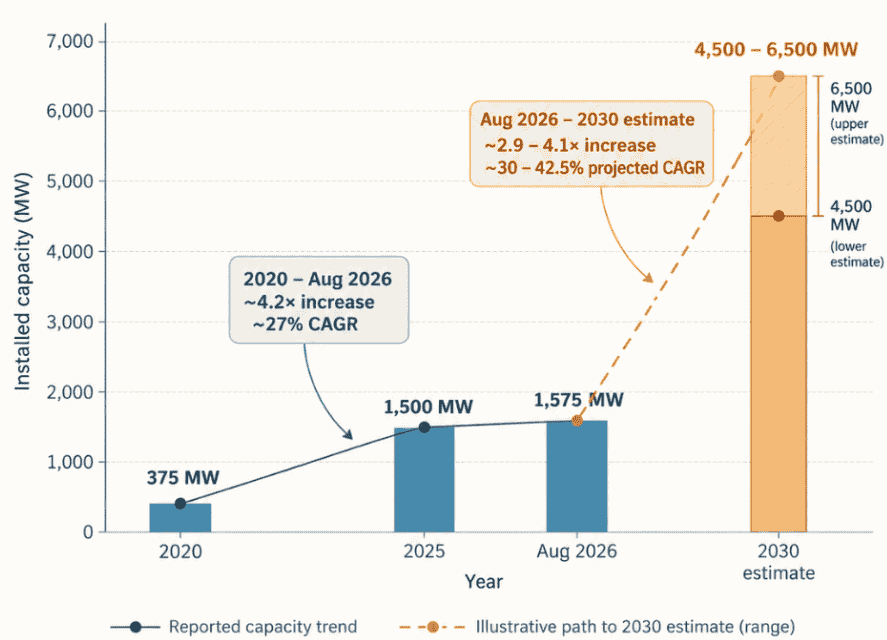
Source: Ministry of Electronics and Information Technology, Government of India.
Yet, the challenges accompanying this expansion are becoming increasingly visible. In Thane, Maharashtra, residents have protested against a proposed hyperscale data center, citing concerns over water and electricity demand and the loss of green space. The developer, Amazon, maintains that the facility will use closed-loop cooling and a dedicated power connection. The dispute highlights a broader question: how can India expand its infrastructure while accounting for the environmental constraints and climate risks that may affect its long-term performance?
But expanding infrastructure is not simply a question of how much can be built. Renewable energy installations, transport networks and digital facilities all depend on physical assets and interconnected systems that must continue functioning under changing environmental conditions. Extreme heat, flooding, drought and changing rainfall patterns can damage infrastructure, interrupt operations and generate financial losses beyond the initial site of impact.
Figure 3. India’s new age infrastructure is projected to grow faster than traditional infrastructure
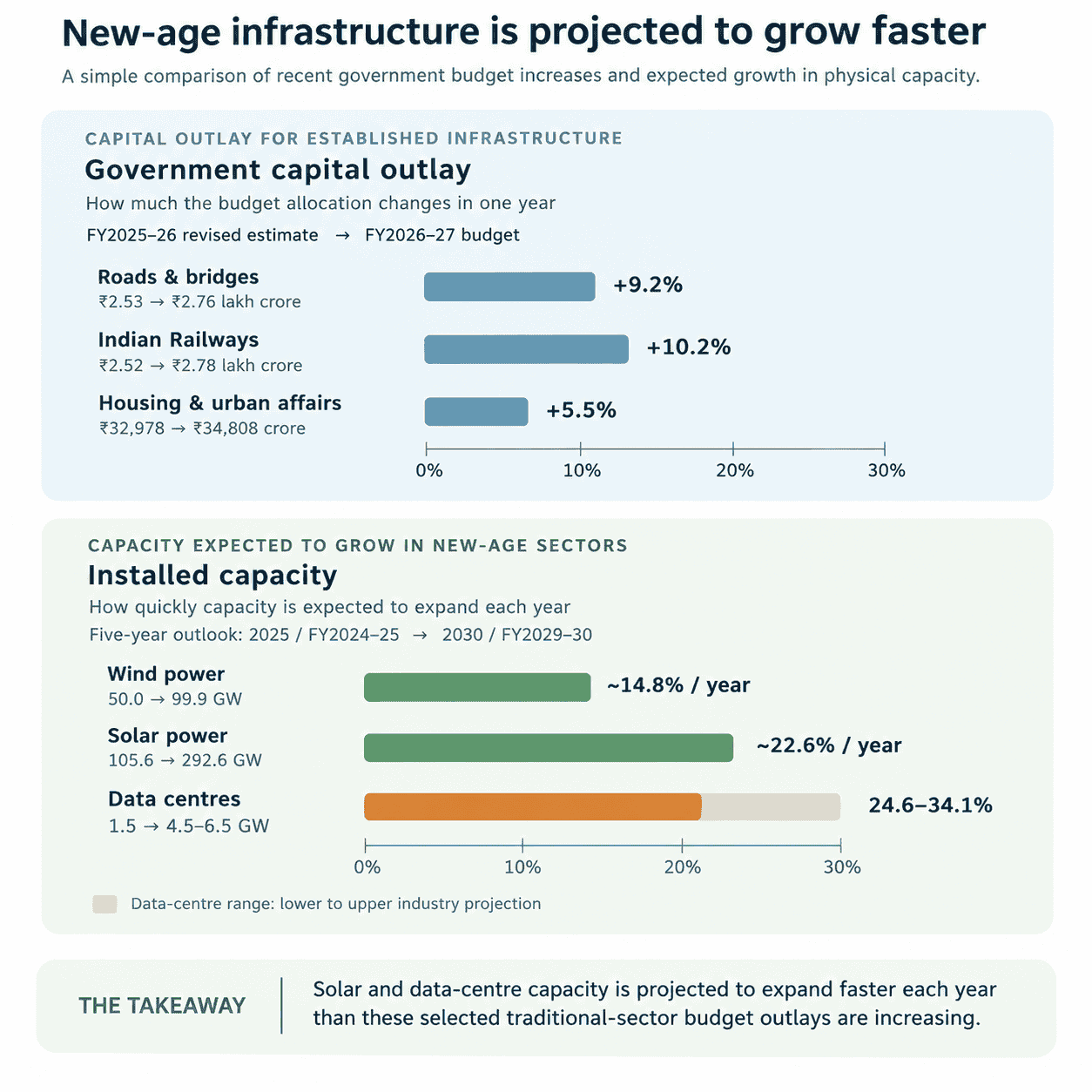
Source: Union budget Expenditure 2026-27
As India builds the infrastructure of its next phase of growth, how can it ensure that these investments remain reliable in a changing climate? This article examines the hazards threatening key infrastructure sectors, the vulnerabilities that can turn physical damage into wider financial losses, and the role of climate-risk assessment, resilient design and insurance solutions in protecting these investments.
Emerging Climate Risks Across India’s Expanding Infrastructure
As India continues to build new infrastructure, an important question is whether these assets will be able to withstand the weather conditions they may face over the coming decades. The risks differ from one sector to another. Data centers, for instance, need a reliable water supply and adequate cooling to keep running, while renewable energy projects can be affected by extreme heat, hailstorms, floods and strong winds. Roads and bridges face their own challenges, from heavy rainfall and flooding to erosion and high temperatures. When these assets are damaged or forced to operate below capacity, the impact often goes beyond repair costs. Delayed transport can hold up supplies and affect smaller businesses, while production losses and rising operating costs can put pressure on investors, lenders and funding agencies. Consumers may also bear the burden through higher prices or interruptions to essential services. Looking at these risks together helps us understand how damage to one part of the infrastructure network can affect businesses, supply chains and the people who depend on them.
1. Data Centers: Water Stress, Heat and Operational Continuity
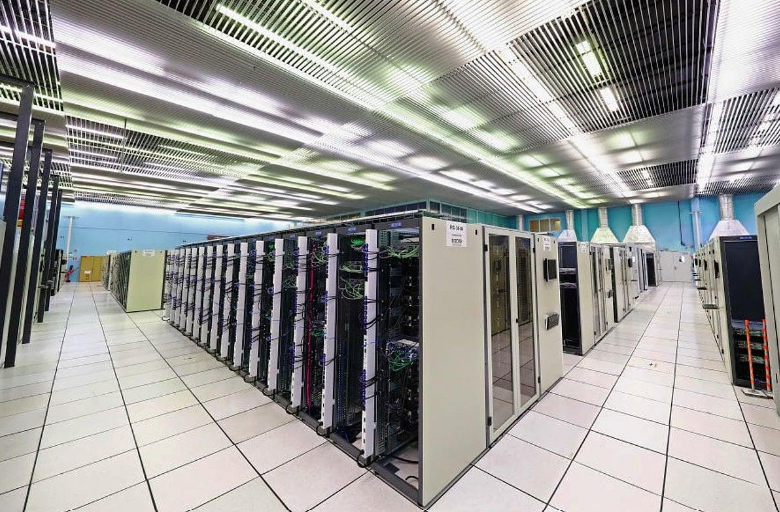
Source: Interior view showing rows of server cabinets inside Yotta’s NM1 data center, Navi Mumbai
India’s digital expansion depends on infrastructure that is far more resource-intensive than it may appear. Data centres operate around the clock, and the servers inside them generate substantial heat. Maintaining safe operating temperatures requires reliable cooling, while the electricity supply must remain stable to prevent service interruptions. For facilities that use water-based cooling, local water availability becomes another important consideration.
A 2026 study by CEEW and SYSTEMIQ estimates that India’s installed data-center capacity reached approximately 1.5 GW by mid-2025, with annual water use estimated at around 150 billion litres in 2025. The study projects that capacity could reach 4.5–6.5 GW by 2030, with water use also expected to more than double.
Water availability is particularly important given where facilities are being built. WRI India’s May 2026 analysis found that more than half of India’s data centres are located in water-stressed regions. Water stress does not automatically mean that a facility faces a shortage, but it can increase competition for local supplies and complicate long-term planning.
Figure 4: Data center located in Water stress Regions
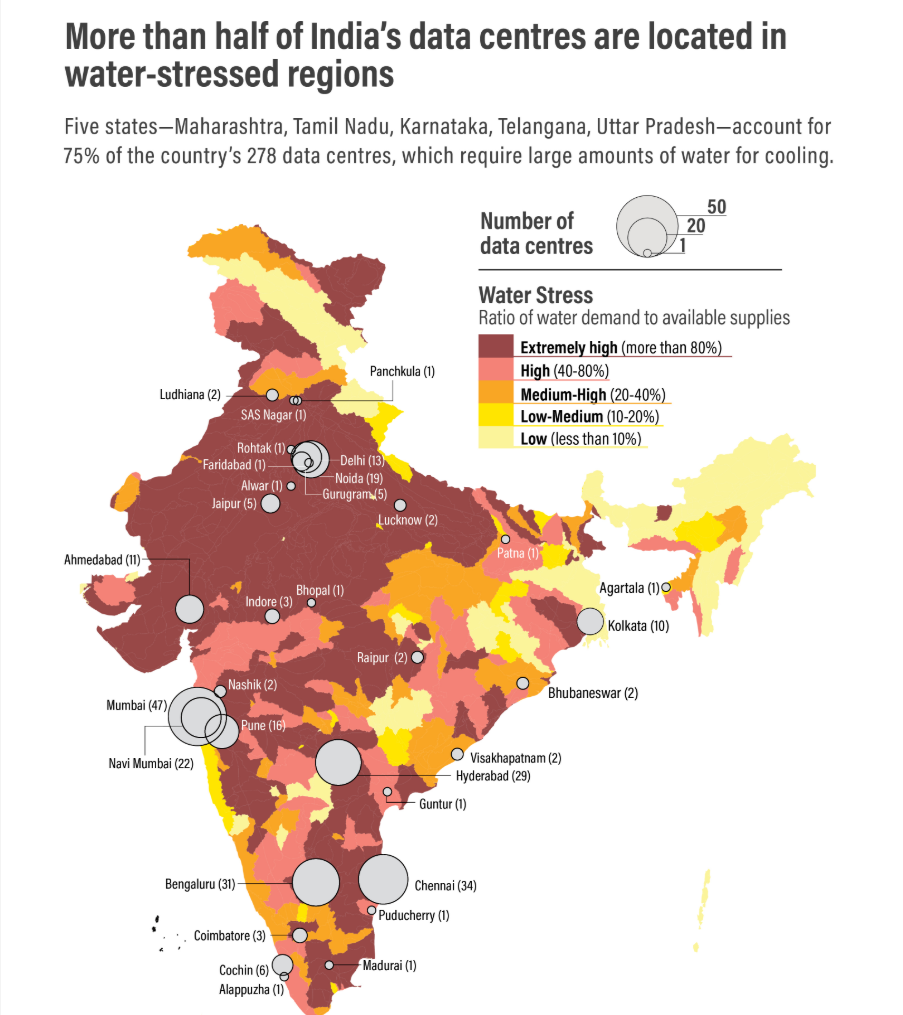
Source: India’s rapidly growing data center sector faces increasing exposure to water stress risks.
The emerging risk has two dimensions. First, rising temperatures can increase cooling demand and operating costs, potentially placing greater pressure on electricity systems during hot periods. Second, prolonged dry conditions and water stress can constrain facilities that rely on freshwater-intensive cooling. Flooding presents a separate physical risk to power backup systems, cooling equipment and site access. These hazards can also interact that a facility experiencing extreme heat may need more cooling precisely when electricity demand is elevated.
For investors and operators, the central question is not simply whether a location has enough power and connectivity today, but whether it can reliably supply water, electricity and cooling under future conditions. Site selection, water-efficient cooling technologies, wastewater reuse and flood-risk assessment should therefore be considered together.
2. Renewable Energy: Heat, Hailstorms and Severe Winds
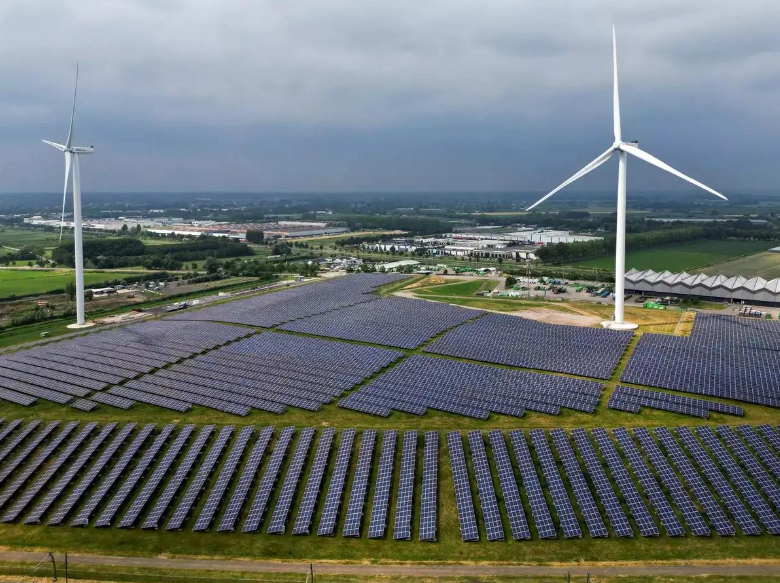
Source: Hinduja Renewables bags 80 MW project in Madhya Pradesh
India’s transition towards renewable energy is increasing its reliance on solar and wind installations to meet growing electricity demand. However, unlike conventional infrastructure, renewable energy assets depend directly on environmental conditions for their performance. Changes in temperature, wind speeds and rainfall can affect how much electricity these projects generate, while extreme events such as hailstorms, floods and tropical cyclones can physically damage equipment. The extent of this risk varies according to the location and design of each project.
A 2026 study published in Applied Energy examined how climate change could influence renewable energy generation in India. Its modelling projected declining solar photovoltaic generation potential across India for the future periods assessed, while projected wind-generation potential varied by region.
Solar power generation is closely linked to weather conditions, making extreme heat and severe weather important risks for solar installations. High temperatures can reduce the efficiency of photovoltaic panels, lowering electricity output even during periods of strong sunshine. Hailstorms can cause more direct damage by cracking panel glass or damaging solar cells, while flooding and strong winds may affect mounting structures and electrical equipment. For project owners, these impacts can mean costly repairs, downtime and reduced electricity generation, resulting in lost revenue.
Source: Times of India
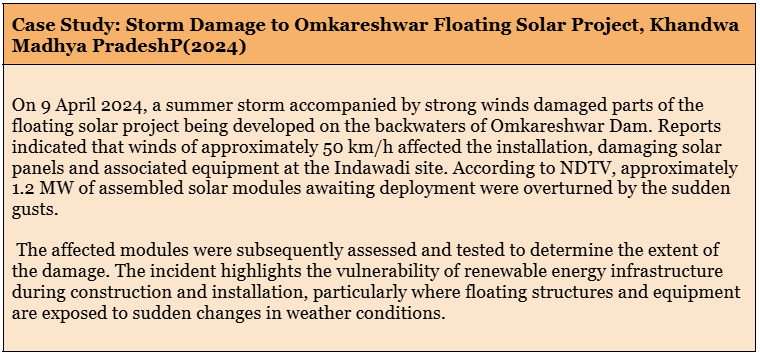
Figure 6: Storm-Related Damage to Solar Modules at the Omkareshwar Floating Solar Project, Khandwa, Madhya Pradesh (April 2024)
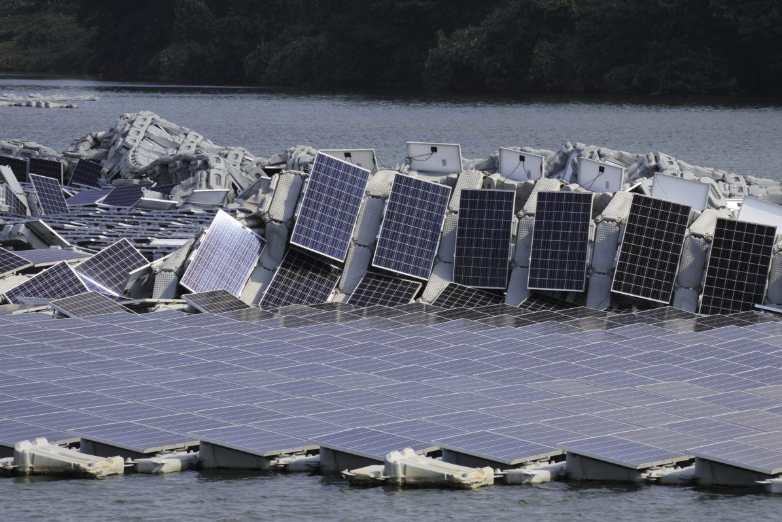
Source: ABP News (10 April 2024); NDTV.
For wind projects, changing wind regimes may affect expected generation, and extreme winds can force turbines to shut down or place stress on equipment. Floods and storms may also damage substations and transmission links, preventing electricity from reaching the grid. These risks mean that the challenge extends beyond protecting individual panels and turbines: it includes reassessing generation forecasts, equipment specifications and the reliability of supporting infrastructure under future conditions.
3. Roads and Bridges: When One Damaged Link Disrupts an Entire Network
Roads and bridges demonstrate the design challenge most directly. Drainage systems, culverts and bridge foundations are engineered to withstand defined rainfall and flood conditions. These assessments often use rainfall intensity, duration and return-period estimates to determine the loads that infrastructure should accommodate. If extreme rainfall patterns change, a design based solely on historical statistics may not provide the same level of protection under future conditions.
Heavy rainfall and flooding can overwhelm drainage systems, weaken road foundations, erode embankments and wash away sections of pavement. At bridges, fast-moving water can remove sediment around piers and foundations—a process known as scour—potentially undermining structural stability. In hilly areas, intense rainfall can trigger landslides and rockfalls that block roads or damage retaining structures.
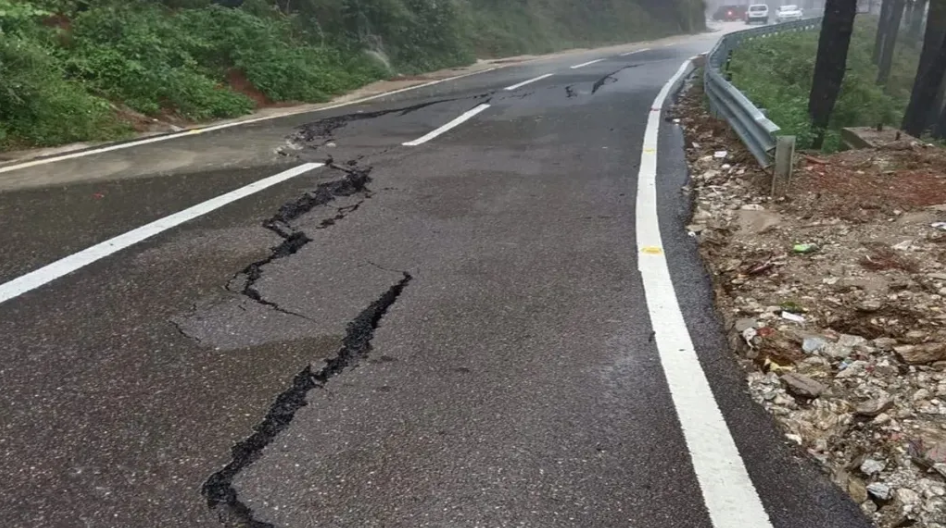
Figure 5: From Gujarat’s national highways to newly built expressways in Uttar Pradesh and Uttarakhand, heavy rain has triggered road collapses.
Heat presents a different challenge. High pavement temperatures can contribute to asphalt softening and rutting, while temperature changes place stress on bridge joints and other components. The scale of the impact depends on the pavement materials, traffic loading, maintenance practices and local conditions. Repeated exposure can increase maintenance requirements and shorten the period before repairs become necessary.
These risks are particularly important for linear infrastructure because vulnerabilities can accumulate along an entire route. A highway may have well-designed pavement yet remain vulnerable if a bridge is exposed to scour or a section of road crosses a flood-prone area. Similarly, a resilient bridge cannot guarantee uninterrupted connectivity if the approaches to it are washed away.
Figure 6: Climate Risks to Critical Infrastructure
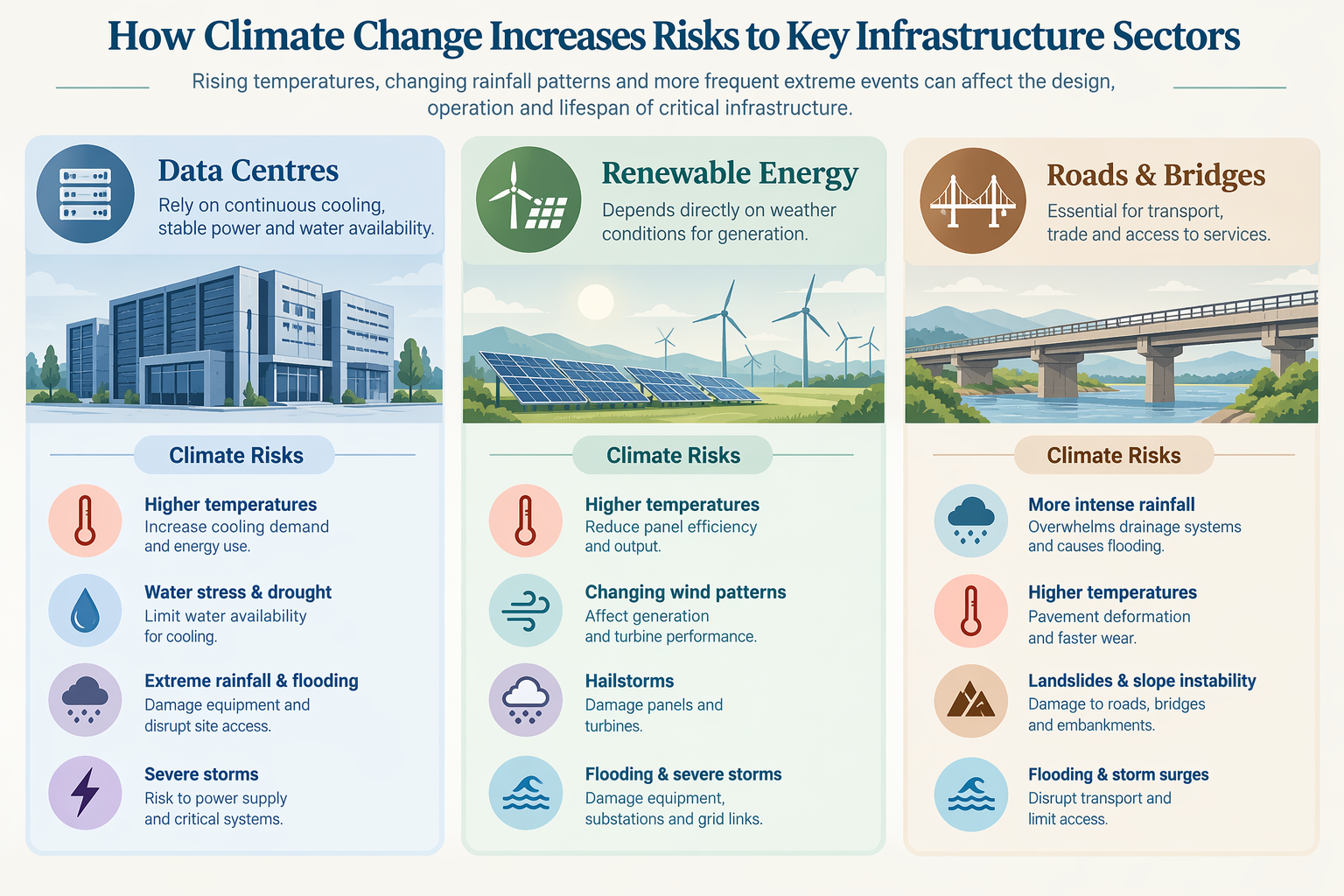
Note: Image for representation purpose only
Building Climate Resilience into Infrastructure
The challenge is not simply to build infrastructure that meets today’s engineering standards, but to ensure that it remains functional as climate conditions change over its lifetime. This requires climate-risk screening at the project-concept stage, followed by more detailed assessments using future climate scenarios, hazard maps and geospatial data as project plans develop. The World Bank’s Climate and Disaster Risk Screening Tools provide a framework for assessing exposure, potential impacts and adaptive capacity before deciding whether further analysis is needed.
These assessments must influence actual project decisions. Site selection should consider exposure to flooding, landslides, erosion and water stress, while engineering design should account for projected conditions through appropriate drainage, structural protection, materials and backup systems. India’s highway sector offers a relevant example: the OECD’s 2024 Compendium of Good Practices documents measures including reinforced embankments, retaining walls, flexible pavements, drainage systems and preventive maintenance.
The economic case for these measures is also significant. The World Bank’s Lifelines: The Resilient Infrastructure Opportunity estimates that, across its modelled scenarios for low- and middle-income countries, resilient infrastructure investment generates a median net benefit of approximately US$4 for every US$1 invested. Once assets become operational, impact-based weather warnings, condition monitoring and preventive maintenance are essential to limit disruption and identify weaknesses before they escalate.
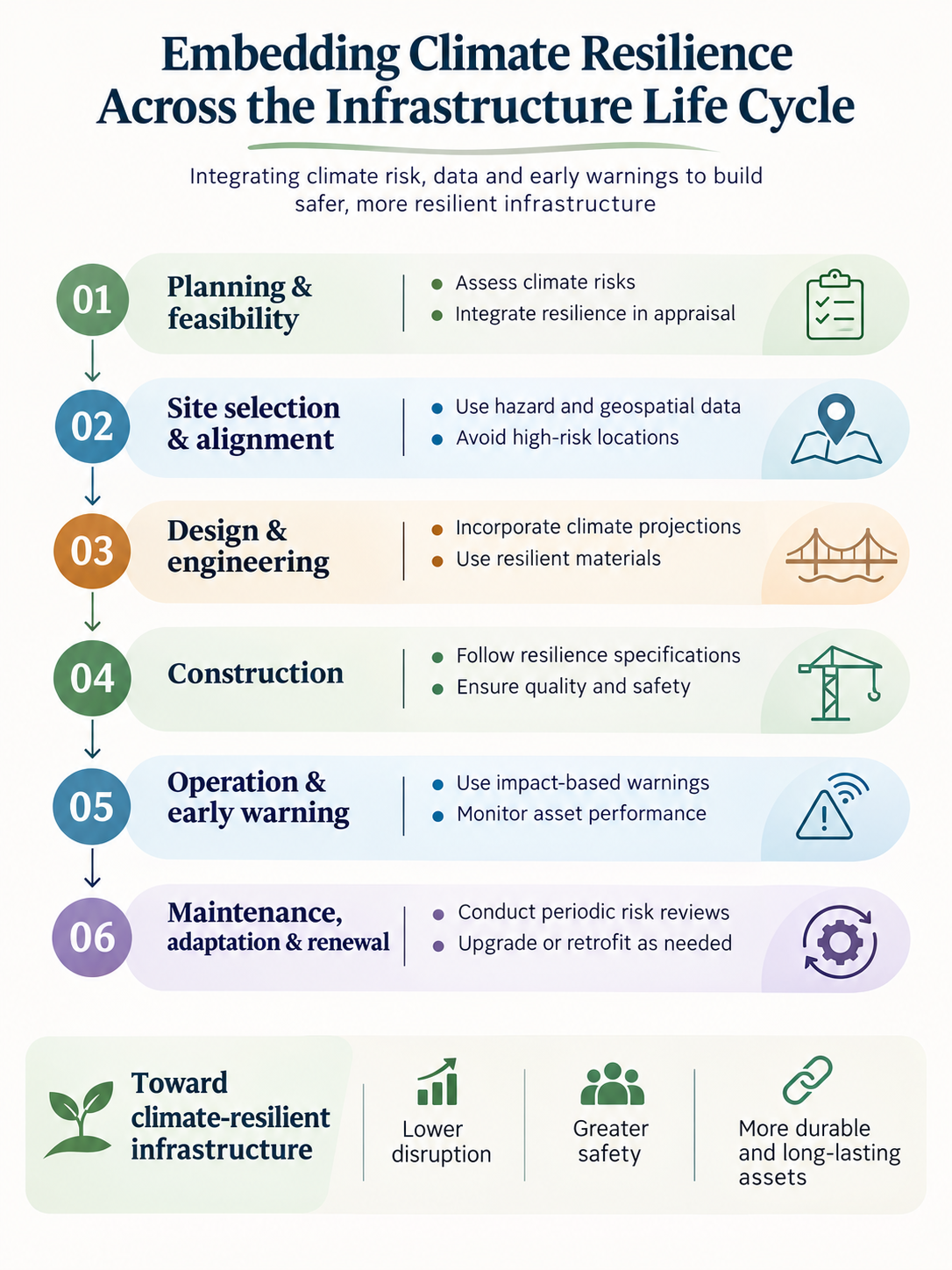
Ultimately, climate resilience must be built into the entire infrastructure life cycle—from planning and financing to design, construction, operation and maintenance. Combining climate projections with data analytics at each stage, supported by continuous monitoring and early-warning systems, can help protect infrastructure investments and reduce losses for businesses, supply chains and communities.
Figure 7: Mitigating the risk associated with climate change
Climate resilience begins when we stop treating adaptation as a distant obligation and start treating it as a present-day choice. Jane Hirshfield’s words offer a fitting close to this reflection.
“More and more I have come to admire resilience.
Not the simple resistance of a pillow, whose foam
returns over and over to the same shape, but the sinuous
tenacity of a tree: finding the light newly blocked on one side,
it turns into another.”
— Jane Hirshfield, Optimism, from Each Happiness Ringed by Lions: Selected Poems (Bloodaxe Books, 2005)
November 2026